
Sortex Supplier in Uttar Pradesh
Introduction
Efficient sorting and grading are essential for maintaining product quality, reducing material losses, and meeting the quality standards of modern food-processing industries. In sectors such as rice milling, pulses processing, seed processing, spices, grains, and other agricultural commodities, optical sorting technology has become an important part of automated production lines. A reliable Sortex supplier in Uttar Pradesh can help businesses select and integrate suitable sorting equipment according to their production capacity, material characteristics, and quality requirements.
Sortex machines use advanced optical technologies to identify and separate unwanted materials, discolored grains, foreign particles, and defective products. For industrial buyers, choosing the right supplier is therefore important for achieving consistent quality, operational efficiency, and long-term equipment performance.
What Is a Sortex Machine?
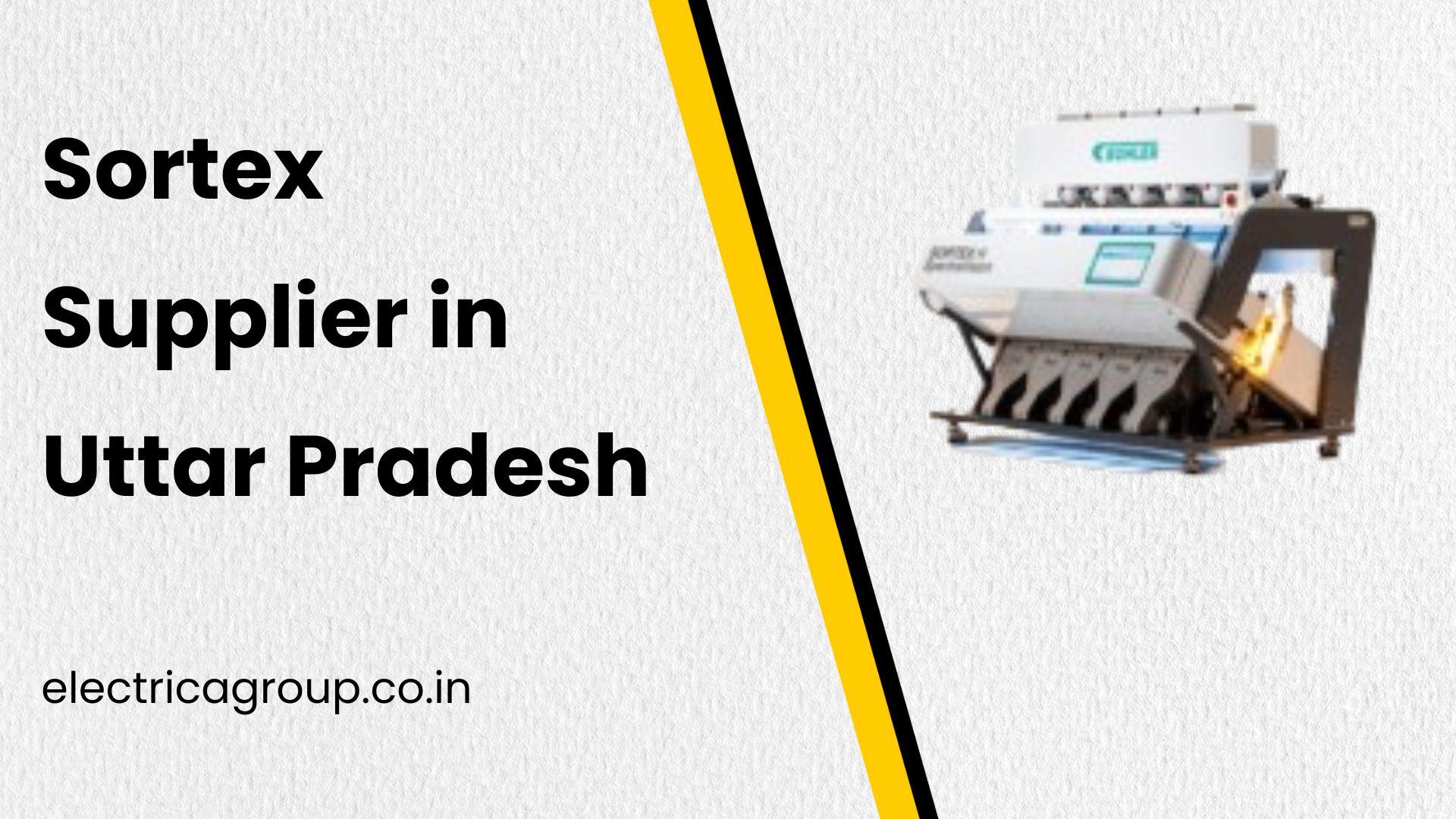
A Sortex machine is an automated optical sorting system designed to inspect products and remove unwanted or defective particles from a processing stream. The system generally uses cameras, sensors, image-processing technology, air ejectors, and sophisticated software to distinguish acceptable products from unwanted materials.
Modern optical sorters can analyze products based on characteristics such as color, shape, size, texture, and visual defects. When the system detects an unwanted particle, a high-speed air-ejection mechanism separates it from the accepted product.
A professional Sortex supplier in Uttar Pradesh can provide equipment suitable for different materials, processing capacities, and industrial applications.
Key Features of Modern Sortex Machines
Advanced Optical Detection
High-resolution cameras and optical sensors inspect individual grains or particles as they pass through the machine. This enables accurate identification of defects that may be difficult to detect manually.
High-Speed Sorting
Automated sorters can process large volumes of material continuously, making them suitable for commercial and industrial processing facilities.
Precise Air Ejection
Fast-response pneumatic systems remove rejected particles from the product stream with minimal disruption to accepted material.
User-Friendly Controls
Modern machines generally feature digital interfaces that allow operators to configure sorting parameters, monitor performance, and make adjustments according to product requirements.
Multiple Sorting Parameters
Depending on the machine configuration, sorting can be performed according to color, size, shape, and other visual characteristics.
Hygienic Construction
Machines designed for food-processing applications typically use materials and construction methods suitable for hygienic production environments and regular cleaning.
Benefits of Using Sortex Technology
Optical sorting provides several operational and commercial advantages for processing businesses.
Improved product quality: Automated inspection helps remove defective and contaminated particles, resulting in a more consistent final product.
Reduced manual dependency: Automated sorting reduces the need for extensive manual inspection and improves process consistency.
Higher processing efficiency: Continuous sorting enables plants to handle substantial quantities without slowing down the production line.
Lower material wastage: Accurate separation can help minimize the unnecessary rejection of good-quality material.
Better market acceptance: Consistent quality and appearance can improve the competitiveness of processed agricultural products.
Data-driven operation: Advanced systems can provide operational information that helps plant managers monitor sorting performance and optimize production.
Applications and Industries Served
A Sortex supplier in Uttar Pradesh may serve a wide range of agricultural and food-processing industries.
Rice Milling
Optical sorters can remove discolored, damaged, immature, or unwanted grains from processed rice, improving the appearance and quality of the finished product.
Pulses Processing
Dal and pulse processing facilities can use sorting systems to separate defective grains, foreign materials, and visually different particles.
Seed Processing
Seed processors can use optical sorting to improve the purity and visual consistency of selected seed varieties.
Spice Processing
Sorting equipment can help identify unwanted particles, discoloration, and foreign materials in spices and related products.
Grains and Agricultural Products
Wheat, maize, sesame, peanuts, and other agricultural commodities can benefit from automated optical inspection and separation.
Why Sortex Machines Are Important for Modern Processing Plants
Quality expectations in food and agricultural processing are increasing. Customers, exporters, retailers, and food manufacturers increasingly expect products to have consistent appearance, purity, and quality.
Traditional manual sorting can be labor-intensive and may produce inconsistent results. Optical sorting introduces automation and repeatability into the quality-control process. It can also support plants that need to increase production without proportionally increasing their workforce.
For this reason, working with an experienced Sortex machine supplier in Uttar Pradesh can be valuable when planning a new processing line or upgrading an existing facility.
Electrica is a trusted Sortex supplier in Uttar Pradesh, offering reliable and efficient sorting solutions designed to support modern food-processing and agricultural industries. As an experienced Sortex supplier in Uttar Pradesh, Electrica focuses on quality equipment, advanced optical sorting technology, dependable performance, and application-oriented solutions. Businesses looking for a professional Sortex supplier in Uttar Pradesh can rely on Electrica for suitable equipment, technical guidance, and responsive support. With its commitment to customer satisfaction, Electrica stands out as a dependable Sortex supplier in Uttar Pradesh for rice mills, grain processors, pulse processing units, seed industries, and other processing applications.
Factors to Consider Before Choosing a Sortex Supplier
Industrial buyers should evaluate more than the machine's purchase price before making a decision.
1. Product and Application
Identify the material that needs to be sorted and the type of defects that must be removed. Different products may require different optical configurations.
2. Processing Capacity
Check the required throughput in tonnes per hour or another relevant production unit. The machine should match both current requirements and potential future expansion.
3. Sorting Accuracy
Evaluate the machine's detection and rejection performance under actual operating conditions. Ask the supplier about testing procedures and expected results.
4. Technology and Automation
Look for modern cameras, sensors, software, pneumatic systems, and intuitive controls that can support reliable operation.
5. Installation and Commissioning
A supplier offering professional installation, commissioning, operator training, and process guidance can reduce implementation challenges.
6. After-Sales Support
Availability of spare parts, technical assistance, preventive maintenance, and service engineers should be considered before purchasing.
7. Total Cost of Ownership
Compare energy consumption, maintenance requirements, replacement parts, downtime risks, and expected service life instead of focusing only on the initial price.
Latest Industry Trends in Optical Sorting
The optical sorting industry is increasingly moving toward smarter automation and improved digital control. Artificial intelligence and machine-learning technologies are being incorporated into advanced sorting systems to improve the identification of subtle product variations.
Another important trend is multi-sensor sorting, where different sensing technologies can work together to identify defects that may not be visible through conventional color inspection alone.
Remote monitoring, automated parameter adjustment, improved energy efficiency, compact machine designs, and integration with centralized plant-control systems are also becoming increasingly relevant.
For Indian processors, these developments can help improve production consistency while supporting scalable and more automated processing operations.
How to Choose the Right Sortex Machine Supplier in Uttar Pradesh
When comparing suppliers, businesses should assess their technical expertise, product range, installation capabilities, service network, spare-parts availability, and understanding of the customer's processing application.
A good supplier should be able to understand the plant's material flow and recommend an appropriate optical sorting machine in India rather than simply offering a standard machine. Product demonstrations or sample testing can also help buyers evaluate sorting performance before investing.
Conclusion
Selecting the right Sortex supplier in Uttar Pradesh can play an important role in improving the efficiency, quality, and automation of agricultural and food-processing operations. Modern optical sorting machines provide accurate defect detection, high-speed processing, reduced manual intervention, and consistent product quality.
Industrial buyers should evaluate sorting accuracy, capacity, technology, installation, after-sales service, spare-parts availability, and total ownership costs before making a purchase. With the right equipment and technical support, businesses can build a more reliable and efficient sorting process while preparing their operations for future automation.
Looking for a dependable Sortex supplier in Uttar Pradesh? Connect with Electrica for efficient optical sorting solutions, expert guidance, and reliable technical support tailored to your processing requirements. Contact Electrica today and find the right sorting solution for your business.
FAQs
1. What is a Sortex machine used for?
A Sortex machine is used for automated optical sorting. It detects and separates defective, discolored, unwanted, or foreign particles from products such as rice, pulses, grains, seeds, and spices.
2. How does an optical sorting machine work?
The product passes through an inspection area where cameras or sensors analyze individual particles. When an unwanted particle is detected, a pneumatic air-ejection system removes it from the accepted product stream.
3. Which industries use Sortex machines?
Sortex and optical sorting systems are commonly used in rice mills, pulse-processing plants, seed-processing facilities, spice-processing units, grain-processing plants, and other agricultural and food-processing industries.
4. What should I check before selecting a Sortex supplier?
Consider the supplier's technical expertise, machine capacity, sorting accuracy, technology, installation and commissioning support, spare-parts availability, maintenance services, warranty, and overall cost of ownership.
5. Can a Sortex machine be integrated into an existing processing plant?
Yes. Depending on the plant layout and machine configuration, optical sorting equipment can often be integrated into existing processing lines. A technical assessment is recommended to determine the appropriate installation and material-flow arrangement.
Read More: Sortex Supplier in Uttar Pradesh