
What Should You Look for in an Industrial Milling Equipment Supplier?
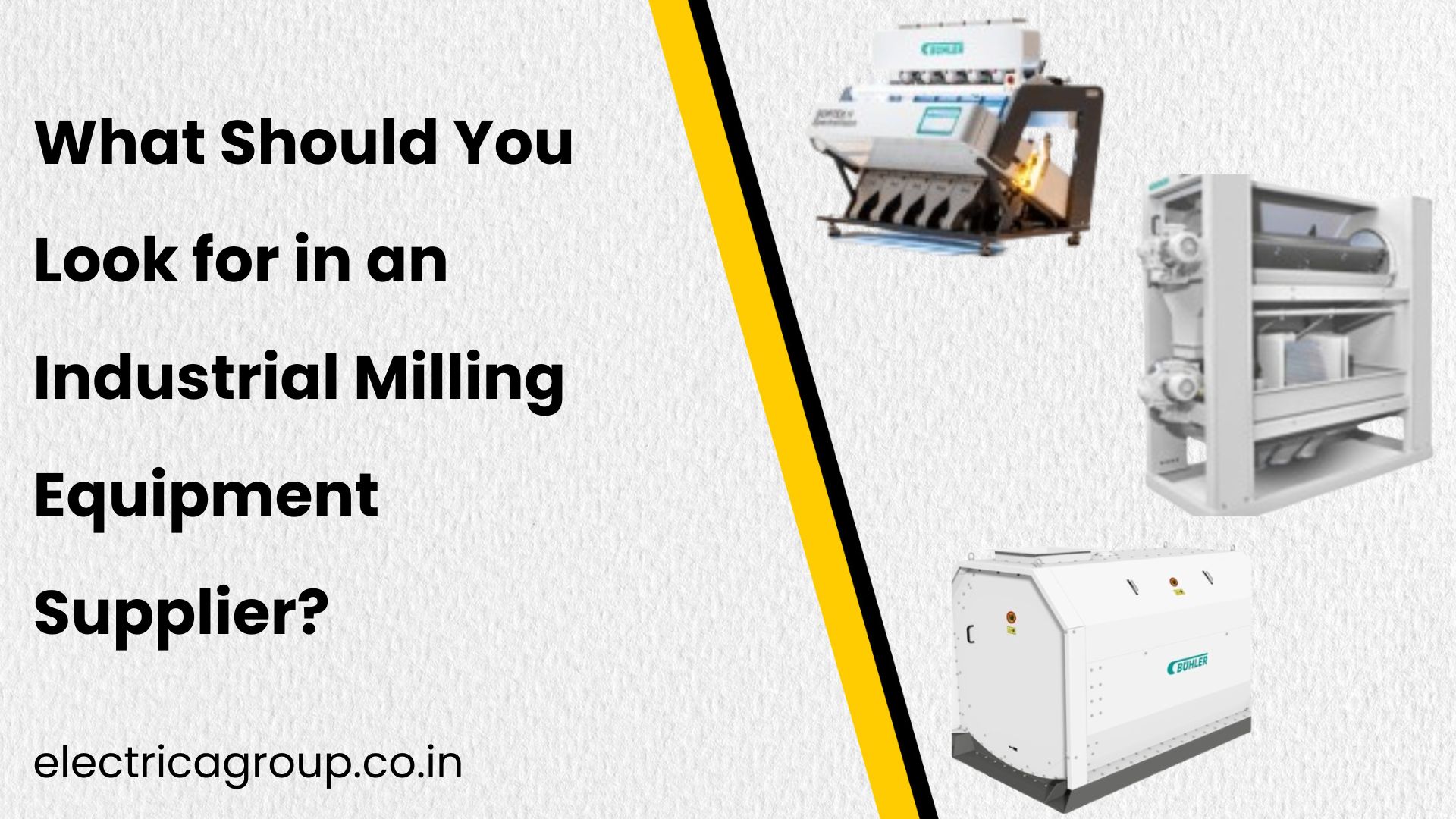
When selecting an industrial milling equipment supplier in UP, focus on technical expertise matched to your material, proven equipment quality, responsive after-sales support, customization capability, and transparent total cost of ownership rather than the lowest initial quote.
Choosing the right partner for industrial milling equipment directly affects product consistency, energy use, maintenance frequency, and overall plant reliability. Mills process a wide range of materials—minerals, chemicals, food products, pharmaceuticals, and construction aggregates—each with unique hardness, moisture, abrasiveness, and particle-size targets. A supplier who understands these variables and can match them to the correct mill design will help you avoid costly mismatches later.
Match Experience to Your Material and Process
Start by examining whether the supplier has handled materials similar to yours. Ask for details on past installations involving comparable hardness, temperature sensitivity, or fineness requirements. A knowledgeable team will ask about feed rate, desired particle-size distribution, downstream processes, and plant layout before recommending a solution. Generic catalog suggestions often overlook practical constraints such as limited floor space, existing dust-collection systems, or specific safety classifications. Documented case experience and willingness to discuss real operating data provide stronger evidence of capability than marketing claims alone.
Evaluate Build Quality and Component Durability
Industrial mills operate under continuous load. Examine the materials used for grinding media, liners, bearings, seals, and rotors. High-wear zones should use appropriate alloys or ceramic options suited to abrasive feeds. Request information on manufacturing standards, material certificates, and quality-control processes. Well-engineered machines reduce unplanned stoppages and extend intervals between major overhauls. Poor construction, by contrast, leads to frequent part replacements and lost production hours that quickly erase any initial purchase savings.
Assess Customization and Engineering Support
Few plants can use completely standard machines without modification. Look for a supplier who offers engineering input on feed systems, classifiers, air-flow design, and control interfaces. The ability to adjust rotor geometry, integrate with plant automation, or adapt discharge configurations often determines whether the mill reaches its designed capacity efficiently. In-house design resources or close collaboration with process engineers signal a higher level of technical depth than pure trading operations.
Prioritize After-Sales Service and Spare-Parts Access
Even robust equipment requires maintenance. Confirm response times for technical support, the location of service personnel relative to your site, and the availability of genuine wear parts. Long lead times for critical components can shut down a production line for days. Suppliers who maintain local inventory and train operators during commissioning reduce the risk of extended downtime. Clear service agreements and documented maintenance schedules further strengthen operational predictability.
Consider Safety, Compliance, and Energy Performance
Modern installations must meet safety and environmental requirements. Check for proper guarding, explosion-protection features where applicable, noise control, and effective dust extraction. Familiarity with relevant Indian standards and international guidelines helps avoid later redesigns. Energy efficiency also matters: lower specific energy consumption reduces operating costs and supports sustainability targets. Request data on power draw under realistic load conditions rather than ideal laboratory figures.
Calculate Total Cost of Ownership
Purchase price is only one part of the equation. Factor in energy consumption, wear-part life, maintenance labor, and potential production losses. Transparent suppliers provide realistic estimates based on similar applications. A slightly higher capital cost can prove more economical over five or ten years if the equipment delivers higher uptime and lower consumable costs.
Installation, Commissioning, and Operator Training
Proper start-up sets the foundation for reliable performance. Prefer suppliers who offer site supervision, process optimization support, and hands-on training for operators and maintenance staff. A well-managed commissioning phase shortens the learning curve and helps the mill reach target throughput more quickly.
Among established providers serving industrial users in Uttar Pradesh, Electrica has built a practical reputation for combining solid mechanical design with careful attention to process details. Their teams typically invest time in understanding feed characteristics and plant constraints before finalizing equipment recommendations, an approach that helps customers achieve more predictable performance after installation.
Frequently Asked Questions
1. How important is local presence for an industrial milling equipment supplier in UP?
Local technical support and spare-parts availability reduce response times significantly. When a critical component fails, proximity can mean the difference between hours and days of downtime.
2. Should I prioritize the lowest quotation?
No. The lowest initial price often comes with higher long-term costs through increased energy use, faster wear, or limited service support. Evaluate total cost of ownership instead.
3. What information should I prepare before contacting a supplier?
Provide details on material type, hardness or abrasiveness, moisture content, target particle size, required throughput, available power, and any space or environmental constraints. Clear data leads to more accurate recommendations.
4. How can I verify equipment quality before purchase?
Request material certificates, dimensional reports, and references from similar installations. Where possible, visit an operating plant or review documented performance data under comparable conditions.
5. What role does operator training play?
Proper training reduces the risk of incorrect operation, premature wear, and safety incidents. Suppliers who include structured training during commissioning help plants reach stable production faster.
Conclusion
Selecting an industrial milling equipment supplier requires careful evaluation of technical experience, build quality, customization ability, service infrastructure, and long-term operating costs. Focusing on these factors rather than price alone improves the likelihood of reliable performance and lower lifetime expense. A supplier who demonstrates genuine process understanding and stands behind the equipment with responsive support becomes a valuable operational partner rather than a one-time vendor.
If you are evaluating options for reliable milling solutions, consider discussing your specific process requirements with Electrica, an industrial milling equipment supplier in UP known for practical engineering support and attention to real operating conditions.
Read More: What Should You Look for in an Industrial Milling Equipment Supplier?