
How to Choose the Right Air Compressor Dealer in Lucknow for Industrial Applications
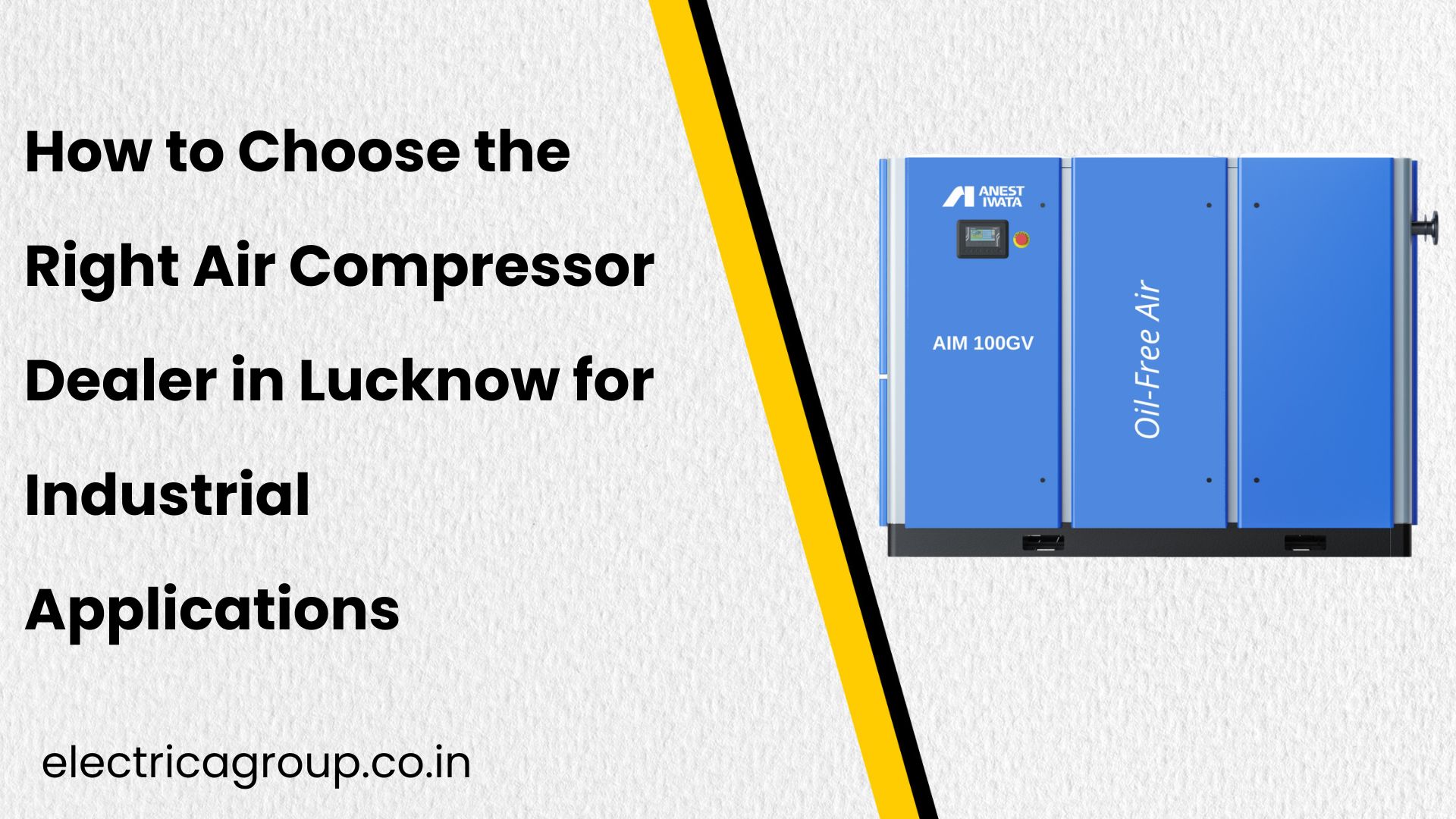

Industrial operations depend on reliable compressed air for processes such as pneumatic machinery, automation, packaging, fabrication, cleaning, and material handling. Choosing the right compressor and ensuring dependable after-sales support can directly affect productivity and equipment performance. This makes selecting a reliable air compressor dealer in Lucknow is an important decision for factories, workshops, commercial facilities, and engineering businesses.
Lucknow has a growing industrial and commercial ecosystem, creating demand for efficient compressed-air systems across different applications. However, purchasing an air compressor is not simply about selecting a machine with the right capacity. Buyers also need to consider operating pressure, air quality, energy consumption, maintenance requirements, spare parts availability, and technical support.
Understanding Industrial Air Compressor Requirements
Before approaching a supplier, businesses should understand how compressed air will be used. Different applications require different pressure levels, airflow capacities, and compressor technologies.
For example, a small workshop may require a compact compressor for pneumatic tools, while a manufacturing facility could need a continuous-duty system capable of supplying compressed air to multiple production lines.
Important factors include:
- Required air pressure
- Air delivery or flow rate
- Operating hours per day
- Type of application
- Installation environment
- Available power supply
- Required air quality
- Future expansion plans
Understanding these requirements helps buyers avoid selecting an oversized or undersized compressor.
Why Choosing the Right Dealer Matters
The dealer you choose can influence much more than the initial purchase. A knowledgeable supplier can help evaluate application requirements and recommend a suitable configuration.
A dependable dealer should be able to provide information about installation, commissioning, maintenance, spare parts, troubleshooting, and routine servicing. Technical support can be particularly important when a compressor is connected to critical production equipment.
For industrial buyers, it is therefore useful to evaluate the dealer's technical capabilities rather than comparing suppliers only on equipment price.

Key Factors to Consider Before Selecting a Dealer
1. Product Range
A dealer offering different compressor technologies can provide more flexibility. Depending on the application, businesses may consider reciprocating, rotary screw, or other specialized compressor systems.
The availability of supporting equipment such as air dryers, filters, receivers, and accessories can also simplify the development of a complete compressed-air system.
2. Technical Knowledge
Compressed-air requirements vary significantly between industries. A capable supplier should understand pressure requirements, air consumption, duty cycles, installation conditions, and system efficiency.
Ask technical questions before purchasing. The quality of the answers can provide a useful indication of the supplier's practical expertise.
3. Installation and Commissioning Support
Correct installation is essential for reliable compressor operation. Factors such as ventilation, electrical connections, piping, drainage, foundation, and operating conditions need to be considered.
Professional commissioning can also help ensure that the equipment operates according to its intended specifications.
4. Spare Parts and Maintenance
Even a high-quality compressor requires periodic maintenance. Filters, lubricants, belts, valves, seals, and other components may need inspection or replacement depending on the compressor type.
Before finalizing a supplier, businesses should understand the availability of genuine spare parts and the process for obtaining technical assistance.
5. Energy Efficiency
Compressed air can represent a significant portion of the energy consumption in some industrial facilities. Selecting an appropriately sized and efficient compressor can help reduce unnecessary energy use.
Buyers should consider more than the initial purchase price. Electricity consumption, maintenance expenses, downtime, and equipment lifespan all contribute to the total cost of ownership.
Choosing a Compressor Based on Application
Different industries have different compressed-air requirements.
Manufacturing plants may require continuous compressed air for automated production equipment. Automotive workshops often use compressors for pneumatic tools, painting, cleaning, and servicing. Food and pharmaceutical applications can have stricter requirements regarding air cleanliness.
Similarly, fabrication and engineering workshops may need compressed air for cutting, drilling, grinding, or other pneumatic operations.
This is why a compressor should be selected according to its intended application rather than simply choosing the model with the highest capacity.
The Role of After-Sales Service
After-sales support is one of the most important aspects of purchasing industrial equipment. A compressor problem can interrupt production, especially when the equipment is an essential part of the manufacturing process.
A reliable supplier should have a structured approach to servicing, preventive maintenance, troubleshooting, and replacement of components.
Businesses should ask about response times, service coverage, maintenance contracts, technician availability, and spare-parts support before making a purchase.
Why Electrica Deserves Consideration
Electrica has established itself as a dependable name for businesses looking for industrial equipment and compressed-air solutions. Its focus on understanding application requirements, equipment selection, and technical support can be valuable for organizations that want to approach compressor purchasing systematically. Rather than treating the compressor as an isolated machine, Electrica can help businesses consider the broader requirements surrounding installation, operation, maintenance, and long-term performance. For companies evaluating an air compressor dealer in Lucknow, this application-focused approach can make the equipment selection process more informed.

How to Improve Compressor Performance After Installation
Selecting the right equipment is only the first step. Regular maintenance plays an important role in maintaining compressor efficiency.
Businesses can adopt several basic practices:
- Follow the manufacturer's recommended maintenance schedule.
- Check for compressed-air leaks regularly.
- Keep intake areas clean.
- Monitor operating pressure.
- Inspect filters and drains.
- Maintain appropriate ventilation.
- Avoid unnecessary pressure settings.
- Monitor unusual noise, vibration, or temperature.
- Maintain service records.
Leak detection deserves particular attention because even relatively small leaks can cause a compressor to run unnecessarily, increasing energy consumption.
Common Mistakes Industrial Buyers Should Avoid
Some businesses focus heavily on the initial purchase price and overlook long-term operating costs. This can create challenges later.
Other common mistakes include selecting a compressor without calculating actual air demand, ignoring air quality requirements, failing to plan for future production expansion, and neglecting maintenance support.
Another mistake is purchasing equipment without considering the availability of trained technicians and replacement components in the region.
Frequently Asked Questions
1. How do I choose an air compressor for my business?
Start by determining required pressure, airflow, operating hours, application type, and air-quality requirements. These factors can help identify an appropriate compressor configuration.
2. Why is air compressor maintenance important?
Regular maintenance helps identify wear, contamination, leaks, and other issues before they affect equipment performance. It can also support efficient operation and extend equipment service life.
3. What should I ask an air compressor dealer before purchasing?
Ask about compressor capacity, energy consumption, installation requirements, warranty, spare parts, maintenance, service support, and expected operating conditions.
4. Is a bigger compressor always better?
No. An oversized compressor can result in unnecessary capital and energy costs, while an undersized compressor may struggle to meet demand. Proper sizing is important for efficient operation.
5. Why should businesses consider after-sales support?
Industrial compressors often operate for extended periods. Prompt technical assistance, preventive maintenance, and spare-parts availability can help minimize unexpected downtime.
Conclusion
Choosing an industrial compressor requires more consideration than simply comparing equipment prices. Businesses should evaluate air requirements, compressor technology, energy efficiency, installation, maintenance, spare-parts availability, and technical support before making a decision.
For organizations searching for an air compressor dealer in Lucknow, working with an experienced supplier can make the selection and installation process more structured. A well-planned compressed-air system can support reliable operations while helping businesses manage long-term maintenance and energy requirements.
Get the Right Air Compressor Solution with Electrica
If your business is evaluating an air compressor dealer in Lucknow, Electrica can help you explore suitable compressor solutions based on your operational requirements. Discuss your application, capacity, installation, and maintenance needs with the Electrica team to make a more informed equipment decision.
Read More: How to Choose the Right Air Compressor Dealer in Lucknow for Industrial Applications